
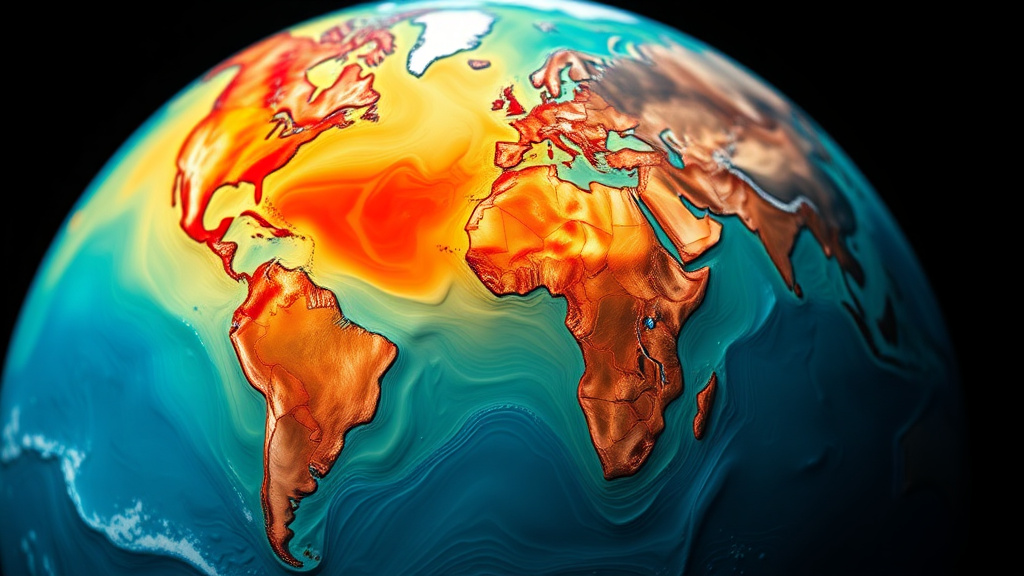
Earth’s climate system works as a massive transport system situated below the waves. Recent groundbreaking research from leading climate scientists has revealed the essential processes by which marine currents function as the planet’s temperature regulator, transporting heat from the equator to the poles and significantly shaping atmospheric conditions worldwide. This article explores how these strong oceanic currents influence our climate system, why their disruption presents major threats, and what scientists are learning about their role in regulating worldwide temperatures for the centuries ahead.
The Vital Function of Marine Currents in Climate Regulation
Ocean currents act as Earth’s principal heat transfer mechanism, transporting warm water from tropical zones toward the poles while concurrently moving cold water back toward the equator. This perpetual circulation process, called thermohaline circulation, is essential for maintaining the planet’s heat balance. Without these powerful underwater rivers, equatorial regions would undergo extreme heat concentration, while polar areas would remain permanently iced. Scientists have discovered that even slight interruptions to these currents can trigger significant shifts in regional and global climate patterns, affecting precipitation, temperature extremes, and seasonal weather variations across multiple continents.
The systems governing ocean currents are remarkably complex, involving interplay of water temperature, salinity, wind patterns, and Earth’s rotation. Contemporary state-of-the-art modeling alongside satellite observations have enabled researchers to map these currents with extraordinary accuracy, demonstrating their intricate role in climate regulation. The Atlantic Meridional Overturning Circulation and the Pacific Thermohaline Circulation illustrate how these systems transport heat energy equivalent to millions of power plants. Understanding these dynamics is crucial for projecting future climate scenarios and comprehending how human activities might change these critical natural mechanisms that have sustained climatic balance for millennia.
Major Ocean Circulation Patterns and Their Roles
Ocean currents act as Earth’s main heat transport system, moving warm water from the tropics to polar areas while returning cold water to the equator. These integrated systems function without interruption, powered by differences in water temperature, salinity, and wind patterns. The three major current systems—the Atlantic Meridional Overturning Circulation, the Pacific Thermohaline Circulation, and the Indian Ocean circulation—function collectively to maintain planetary heat balance and sustain environmental balance. Understanding how these systems function is vital to predicting future climate changes and their impacts on human societies worldwide.
The Atlantic Meridional Overturning Circulation
The Atlantic Meridional Overturning Circulation (AMOC) represents one of Earth’s most significant climate regulators, moving large amounts of warm water northward toward the tropics. This circulation includes the Gulf Stream and North Atlantic Current, which carry tropical heat to more northern regions, rendering regions like Western Europe significantly warmer than their geographic locations would indicate. The warm water over time cools and sinks in the North Atlantic, initiating a deep reverse flow that closes the circulation cycle. Scientists view AMOC fundamental to sustaining the Northern Hemisphere’s climate patterns and local weather patterns.
Recent studies has raised concerns about AMOC’s stability, as climate change drives freshwater inputs from melting ice sheets and increased precipitation. These freshwater additions reduce water density, possibly undermining the sinking mechanism that powers the circulation. A decline in AMOC could have profound consequences, including decreased heat delivery to Europe, changed rainfall distributions, and major changes in Atlantic hurricane activity. Climate scientists continuously monitor AMOC strength through satellite observations and buoy array systems to detect any warning signs of disruption.
The Pacific Ocean’s Thermal Circulation System
The Pacific Ocean’s thermal circulation system works as a massive heat engine, powered mainly by differences in temperature and salinity rather than wind patterns alone. Dense, cold water settles in the North Pacific and Southern Ocean, beginning a slow yet relentless deep-water conveyor that moves water across the basin over centuries. This system brings nutrient-rich deep water to the surface in certain regions, maintaining productive marine ecosystems and fish stocks. The Pacific’s thermohaline system significantly influences local climate patterns, precipitation distribution, and seasonal weather changes in Asia, North America, and Oceania.
The Pacific thermohaline circulation interacts dynamically with weather patterns and other marine systems, generating complex feedback mechanisms that affect worldwide climate balance. Changes to this circulation drive events such as El Niño and La Niña events, which have worldwide climatic consequences. Researchers use sophisticated modeling systems and measurement records to understand how shifting water temperatures and freshwater inputs might alter circulation patterns in the Pacific. These investigations help predict potential shifts in local climate conditions and their impacts on agriculture, water resources, and communities along the coast throughout the Pacific basin.
Climate Impact and Long-term Consequences
Ocean currents act as Earth’s primary heat transport mechanism, transporting warm tropical waters to the poles while delivering cold water to the equator. This continuous circulation maintains global temperature patterns and preserves climatic stability across distinct zones. However, climate change threatens to disrupt these sensitive mechanisms. Increasing levels of greenhouse gases heat surface waters, risking slowdown of thermohaline circulation and weakening the Atlantic Meridional Overturning Circulation. Such disruptions might cause catastrophic regional climate shifts, including sharp temperature swings in Europe and altered precipitation patterns impacting billions of people globally.
Scientists forecast mounting serious impacts if ocean current systems keep declining. Weakened currents would reduce heat movement to northern latitudes, counterintuitively triggering freezing in some areas while accelerating warming elsewhere. These changes could devastate marine ecosystems, collapse fisheries, and trigger financial instability across coastal communities. Understanding ocean flow patterns is critical for accurate climate modeling and creating viable solutions. Continued research and global collaboration are crucial to preventing irreversible damage to these fundamental climate regulators and protecting coming generations from extraordinary climate threats.
