
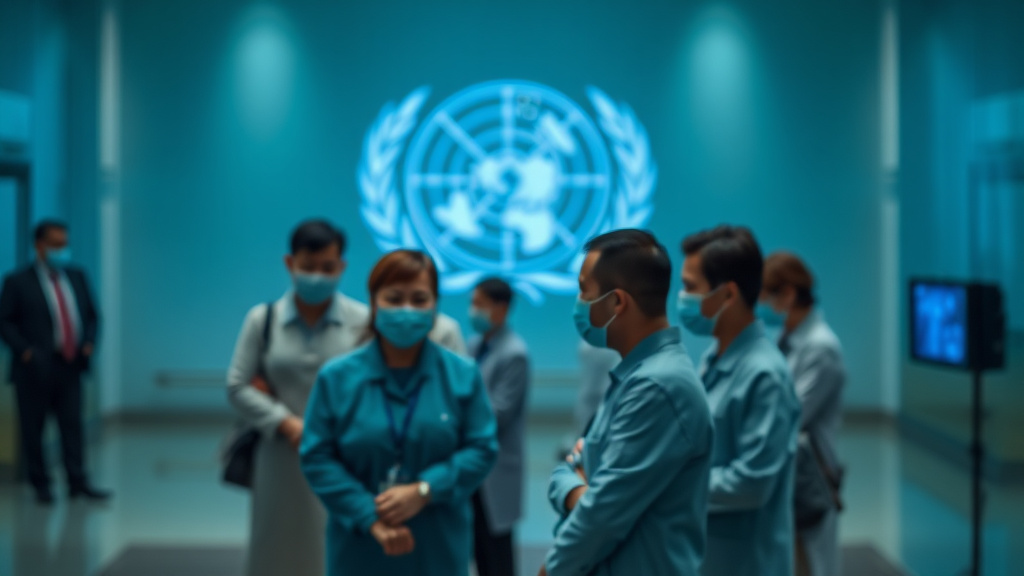
In a major move to address the increasing threat of infectious diseases across the world, the World Health Organization has introduced an ambitious new program designed to strengthen worldwide disease monitoring and swift response capabilities. This broad-based effort aims to address key deficiencies in outbreak readiness, upgrade timely detection systems, and enhance collaboration among nations. By combining resources and knowledge, the WHO seeks to prevent emerging outbreaks from developing into catastrophic global health emergencies, possibly protecting millions of lives.
Worldwide Response Strategy
The WHO’s recent effort develops a integrated system that empowers nations to collaborate together in fighting epidemic challenges. By developing uniform procedures and information networks, countries can share essential disease data in immediate fashion, allowing faster identification of novel infectious agents. This unified approach strengthens the global health security infrastructure, guaranteeing that resources are deployed effectively and purposefully to contain outbreaks before they extend beyond frontiers and continents.
Central to this strategy is the development of regional coordination hubs outfitted with advanced diagnostic capabilities and qualified professionals. These hubs will serve as frontline defense mechanisms, offering urgent technical guidance and guidance to impacted countries. The initiative emphasizes institutional strengthening in developing regions, where resources are often limited, guaranteeing fair distribution to monitoring systems and emergency response capabilities. Through this inclusive model, the WHO aims to create a truly interconnected international health infrastructure.
The program also focuses on funding for advanced technology and artificial intelligence for disease monitoring. Machine learning algorithms will analyze large volumes of data to predict transmission trends and identify high-risk areas ahead of disease spread. This proactive approach constitutes a paradigm shift from reactive responses to preventive strategies. Improved monitoring networks will track pathogen mutations and spread dynamics, allowing medical authorities to modify responses swiftly and effectively.
Furthermore, the WHO commits to enhancing collaborative ties with private sector stakeholders, educational organizations, and NGOs. This collaborative ecosystem fosters innovation in vaccine research, diagnostic assessment, and treatment options. By eliminating divisions between government health bodies and research institutions, the program accelerates scientific breakthroughs and enables swift rollout of solutions. Clear and honest information exchange increases public confidence and improves community engagement in disease prevention efforts.
Execution and Essential Parts
The WHO’s program operates through a comprehensive framework integrating technological innovation, cross-border partnerships, and budget management. This methodical strategy integrates established observation frameworks with new digital platforms, allowing real-time data sharing between nations. By creating explicit guidelines and funding mechanisms, the entity confirms involved states can deploy extensive outbreak tracking networks. The initiative emphasizes at-risk areas, strengthening healthcare infrastructure where epidemics present the highest threat to worldwide safety.
Initial Identification Systems
Advanced surveillance technology constitutes the backbone of the WHO’s rapid identification infrastructure. The program deploys AI and automated analysis models to analyze medical information trends, detecting potential disease spread before they spread extensively. Laboratories across member countries receive upgraded equipment and instruction to improve testing precision. This integrated system facilitates swift detection of novel infectious agents, allowing health authorities to implement control strategies promptly and successfully.
The early detection framework also emphasizes local participation and community-based reporting channels. Healthcare workers in remote areas undergo instruction to detect abnormal health indicators and communicate results through encrypted communication systems. The WHO offers immediate guidance and guidance to frontline personnel, creating a responsive ecosystem. This ground-level method ensures outbreaks are discovered at their source, optimizing intervention effectiveness and limiting spread risk.
Fast-Acting Teams
Expert rapid deployment teams are prepared to deploy within 48 hours of outbreak confirmation. These integrated units include epidemiologists, laboratory specialists, logisticians, and communication experts. Teams undergo rigorous training in disease investigation, sample collection, and on-site epidemiology. The WHO maintains strategically placed supplies and supplies in priority regions worldwide, ensuring teams can immediately address new outbreaks with minimal delays.
Response teams collaborate closely with national health authorities and community groups, honoring cultural considerations while putting in place essential control strategies. Training prioritizes open dialogue with the public to preserve confidence during critical situations. The initiative incorporates psychological assistance for team members operating in high-risk environments. Ongoing assessment and post-operation reviews strengthen procedures, making certain each response yields critical learning for future operations.
- Send epidemiologists within 48 hours globally
- Perform epidemiological investigations and sample gathering operations
- Liaise with local authorities and health departments
- Offer real-time data analysis and disease surveillance
- Establish containment strategies and prevention measures
Anticipated Results and Future Impact
The WHO’s program is anticipated to produce significant results over the next five years. Enhanced surveillance systems will enable faster discovery of novel disease-causing organisms, markedly shortening response periods. Countries implementing these protocols can expect improved disease tracking capabilities and laboratories with improved resources. The initiative is designed to implement standardized reporting mechanisms across all participating nations, establishing a cohesive global network. Initial assessments suggest that rapid intervention protocols could prevent up to 80% of potential outbreaks from becoming pandemics, substantially transforming how the world addresses disease-related threats.
Looking ahead, this initiative promises to establish a fresh benchmark for international health cooperation and preparedness. By investing in infrastructure, training, and knowledge sharing, the WHO foresees a future where disease outbreaks are rapidly controlled at their source. Member nations will benefit from collaborative research findings, aligned vaccination initiatives, and enhanced medical systems. The enduring consequences extends beyond controlling illness spread to creating adaptable health frameworks capable of withstanding future health threats, ultimately fostering a safer world for all populations and generations to come.
